
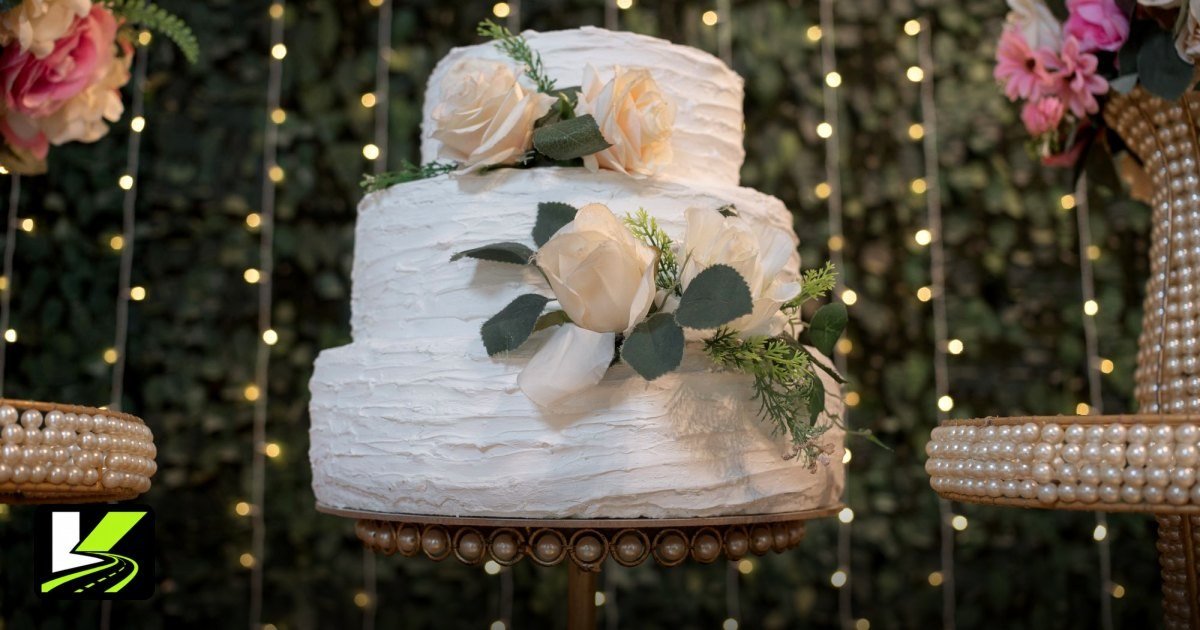
Why a Wedding Cake Is Not Just a Big Birthday Cake
A birthday cake that arrives twenty minutes late is a mild inconvenience. A wedding cake that arrives twenty minutes late arrives after the photographer has finished the reception set, after the coordinator has already moved the cake table, and in front of two hundred people who will remember it. A wedding cake delivery gets one attempt and no partial credit. That single fact changes every decision you make about the trip.
The other difference is structural. A single-tier cake is a self-supporting object. A three- or four-tier cake is a stacked load held together by dowels and friction, with most of the mass sitting on the bottom tier. Every acceleration, every speed bump on the approach road to a beach venue, every hard stop on Sheikh Zayed Road transmits force through that stack sideways. Bakers who have never had a problem with regular orders are often surprised the first time a tiered cake leans — the cake did not fail, the transport method did. Wedding cake delivery is the one job where how you move it, not how you baked it, decides the outcome.
If you already handle regular dessert orders, our guide to delivery for home bakers in Dubai covers the everyday workflow. What follows here is the layer on top of it: the parts specific to a wedding, where the venue has its own rules and the timing is fixed by someone else's schedule.
The Heat Problem, and What It Actually Does
Dubai in August runs to roughly 41C in the afternoon, dropping to about 29C overnight, with maximum relative humidity across the UAE commonly sitting between 63 and 80 per cent. Those two numbers together are worse than either alone. Heat softens fat-based frostings; humidity puts moisture on cold surfaces the moment a chilled cake meets warm air, which is what turns a crisp fondant finish cloudy and makes sugar decorations go tacky.

Photo: Unsplash
Practically, this rules out three things people still do: putting the cake in the boot, leaving the vehicle parked in the sun while collecting something else, and doing a wedding cake delivery on the same run as other drop-offs. The boot of a car parked in Dubai sun climbs well past ambient temperature within minutes, and a multi-stop route means the cake spends the whole route absorbing heat every time a door opens.
What works is boring and repeatable. Chill the finished cake thoroughly before it moves. Cool the vehicle cabin down before the cake goes in, not after. Carry the cake in the cabin with the air conditioning on the whole way, and route the vehicle so the cake is never in direct sun through a window. For reference, Dubai Municipality requires commercial chilled food transport to hold 0-5C under the Dubai Food Code, and while a private car doing one cake is not the same regulatory category as a refrigerated fleet vehicle, that range is the right target for buttercream and ganache regardless.
Frosting choice is a delivery decision as much as a taste decision. Swiss or Italian meringue buttercream holds up better than American buttercream in the heat; ganache is more stable again; fresh cream is the least forgiving thing you can put on a cake that has to survive a Dubai afternoon. If a client insists on fresh cream for a July or August wedding, the honest answer is to explain what will happen to it and price the risk in, or decline. Our notes on packing food for same-day delivery in UAE heat go into the packaging side in more depth, and the cold chain guide for UAE food sellers covers what happens when temperature control is the whole product.
Transport Tiers Separately, Always
The single highest-leverage change most bakers can make to wedding cake delivery is to stop moving assembled cakes. Three tiers and up should travel as individual tiers, each on its own board, each in its own box, and get stacked at the venue. This feels like more work and is actually less, because a ten-minute assembly on a level table at the destination replaces an hour of anxiety about whether the stack is shifting behind you.
The checklist that makes this reliable:
- Rigid boards, not thin card. A flexing board under a heavy tier is what starts a lean. Use a reinforced or double board for the base tier.
- One box per tier, sized so the tier cannot slide inside it. Empty space in a cake box is the enemy.
- Non-slip matting under every box on the vehicle floor. Not the seat — the footwell floor is flatter and lower.
- Dowels and the centre rod pre-cut and packed in a labelled bag with your assembly kit.
- A repair kit: a piping bag of matching frosting, a small palette knife, spare flowers or toppers, paper towels. Something always needs a touch-up after the drive.
- Toppers and delicate sugar work travel separately and go on last, at the venue.
Assembling on site also means the person who built the cake is the person who sees it in its final position — which is when you catch that the table is not level, or that it has been placed directly under an air vent or a spotlight, both of which will do damage over a four-hour reception.
The Venue Rules Nobody Tells You About

Photo: Unsplash
This is where wedding cake delivery in Dubai differs most from anywhere else, and it is the part first-time bakers consistently underestimate. Hotel and resort venues run controlled back-of-house operations, and an outside supplier arriving unannounced with a cake is treated as exactly that — an outside supplier arriving unannounced.
Confirm all of the following in writing with the venue at least a week before, ideally through the couple's event coordinator so there is a paper trail:
| What to confirm | Why it bites you |
|---|---|
| Cakeage or external supplier fee | Many hotel venues charge to accept an outside cake, per guest or as a flat fee. If the couple has not budgeted it, it becomes your awkward conversation on the day. |
| Food safety or trade licence copy | Some venues will not accept a cake from an unlicensed home kitchen at all. Ask before you accept the booking, not after. |
| Delivery entrance and loading bay | You will almost certainly be sent to a service entrance, not the lobby. Get the exact location — large resorts have several. |
| Driver access and security pass | Some properties need the driver's name and Emirates ID submitted in advance. An unbadged driver can be turned away at the gate. |
| Service lift availability | The service lift is shared with catering, housekeeping and other suppliers. At peak turnover you can wait fifteen minutes with a cake in your arms. |
| Who signs for the cake | You want a named banquet or events captain, not whoever is standing nearest. |
| Refrigeration on site | If the cake must arrive early, ask whether they will hold it in a walk-in chiller and who is responsible while it is there. |
| Where exactly the cake table sits | So you can check for vents, spotlights and doorways before you place it. |
Outdoor and beach venues add their own problem: the cake often cannot go out until close to the moment it is needed, because nothing survives long outdoors in a Dubai summer evening. In that case your job is to deliver into an air-conditioned holding area and hand over to the venue with clear written instructions about when it should be brought out.
One cake, one dedicated trip
A wedding cake should never share a route with other parcels. Book a solo Koriyar trip with a fixed pickup time, live tracking the couple can follow, and proof of delivery captured at the venue.
Book a solo delivery →Building the Delivery Window Backwards
Do not start from when you will be ready. Start from the moment the cake needs to be standing in position, and work backwards. A workable wedding cake delivery schedule for a Dubai evening reception looks like this:
| Time before guests seated | What is happening |
|---|---|
| 3 hours | Cake fully chilled, boxed by tier, kit packed, vehicle cabin pre-cooled. |
| 2h 30m | Loaded and departing. Add a full hour of buffer for traffic if crossing emirates. |
| 2 hours | Arriving at the service entrance, clearing security, locating the lift. |
| 1h 30m | On the floor, table checked for level and for vents or spotlights overhead. |
| 1h 15m | Tiers stacked, dowelled, dressed, toppers on, touch-ups done. |
| 1 hour | Photos taken, handover signed, you leave before the room is turned over. |
The two commonest scheduling mistakes are opposite errors. Arriving too early leaves the cake standing in a function room with doors open and catering moving through for hours. Arriving too late — inside the last hour — means any single delay, and there is always one, lands directly on the couple's timeline. Two to three hours out is the window that absorbs a lift queue without creating an exposure problem.
Cross-emirate jobs need more padding than people assume. A Sharjah kitchen delivering to a Dubai Marina venue on a Friday evening is a genuinely different trip from the same distance on a Tuesday morning. If you also serve the northern emirates, our guides on delivery for home bakers in Sharjah and same-day delivery for Ajman home bakers cover those routes.
The Handover That Protects You
Everything above is about getting the cake there intact. The last step of a wedding cake delivery is about not being blamed for what happens after you leave, which is a separate risk and one bakers routinely fail to manage.
The cake will sit unattended for hours. Tables get moved. Guests lean on things. Children are present. If something goes wrong at 10pm and the only record is your memory, you will end up refunding a cake you delivered perfectly. The fix takes ninety seconds:
- Photograph the finished cake in position, from two angles, with something in frame that fixes the location.
- Get a named signature from the banquet or events captain confirming the cake was received complete and undamaged.
- Send the photos to the couple or coordinator immediately with a short message noting the time of handover.
- Leave written cutting and storage instructions with the venue — when to bring it out if it is being held, how to store leftovers.
Once a timestamped photo and a named signature exist, the conversation about later damage is a factual one instead of an argument. This is the same discipline that makes ordinary orders defensible, and we have written about why confirming before dispatch prevents costly delivery mistakes across all order types.
What to Charge for It
Wedding cake delivery is not a drop-off, and pricing it like one is why bakers end up doing three hours of unpaid work. The trip involves a dedicated vehicle, no shared route, a fixed arrival window, on-site assembly labour and a waiting period. All five of those are cost.
Quote it to the client as a separate line item rather than burying it in the cake price. Clients accept a clearly explained setup and delivery charge on a wedding far more readily than on a AED 120 birthday cake, because they are already used to per-item pricing from florists and venues. Build the quote from a solo booking rate, add your assembly time at whatever you value an hour at, and add a contingency for the cross-emirate case.
Two things worth being firm about. First, never absorb a cakeage fee you did not agree to — surface it during the venue confirmation a week out so it lands on the couple's budget, not yours. Second, do not discount a wedding delivery to win the cake order. The delivery is the part of the job with the least margin for error, and it is the wrong place to compete on price.
Booking the Trip with Koriyar
If you would rather not drive the cake yourself, the thing to book is a solo trip, not a standard parcel slot. Koriyar lets you book a dedicated rider for a single pickup and a single drop, with a pickup time you set, live tracking the couple or coordinator can follow, and proof of delivery captured at the venue — which is exactly the record described above.
What to put in the booking notes, every time: that the item is a tiered cake travelling in the cabin and not the boot, the service entrance rather than the main lobby, the driver name required at security if the venue asked for one, the contact name and number of the banquet captain, and a hard arrival window rather than a vague afternoon slot. A rider who knows all of that before starting is a rider who does not phone you from a gate.
For a broader view of how bakery orders fit into the wider Koriyar workflow, see our bakery delivery service for the UAE and the cake delivery logistics planner for Dubai.
Frequently Asked Questions
How far in advance should a wedding cake be delivered to a Dubai venue?
Aim to arrive two to three hours before guests are seated, not earlier. Arriving too early means the cake sits in a function room while doors are open and catering is moving through, and arriving inside the last hour leaves no margin for a lift queue or a security check at the loading bay. Two to three hours gives you time to assemble tiers, dress the cake and still leave before the room is turned over.
Should a tiered cake be assembled at home or at the venue?
Transport tiers separately and assemble on site whenever the cake is three tiers or more. A fully stacked cake concentrates weight on the lower tiers, and every bump in the road works that weight sideways. Boxing each tier on its own board, then dowelling and stacking at the venue, converts the riskiest part of wedding cake delivery into a controlled ten-minute job on a level table.
What temperature does a wedding cake need during transport in UAE summer?
Dubai reaches around 41C in August with humidity commonly between 63 and 80 per cent, so a car boot is not an option. Pre-chill the cake, run the vehicle cabin cool before loading, and keep the cake in the air-conditioned cabin. Dubai Municipality requires commercial chilled food transport to hold 0-5C under the Dubai Food Code, and buttercream or ganache behaves best kept close to that range until it reaches the venue.
Who is responsible if a wedding cake is damaged on delivery?
Whoever last handled it, which is why a photographed handover matters. Take a timestamped photo of the finished cake in position and get a named signature from the banquet or events captain, not from a passing waiter. Once the cake is photographed in place and signed for, later damage from a moved table or a guest becomes the venue's issue rather than an argument you cannot win.
Do Dubai hotels charge a fee to accept an outside wedding cake?
Many do. A cakeage or external supplier fee is common at hotel venues in Dubai and is usually charged per guest or as a flat handling charge, and some venues also ask for a food safety or trade licence copy before they will accept an outside cake. Confirm both points with the venue in writing at least a week ahead so the couple is not surprised on the day.
How much does wedding cake delivery in Dubai typically cost?
A dedicated solo trip is the only sensible option for a wedding cake, so expect to pay more than a standard pooled parcel rate. Price it as a solo booking with a waiting allowance for assembly time, then quote it to the client as a line item rather than absorbing it, because a wedding cake delivery involves setup labour that a normal drop-off does not.
Can a wedding cake be delivered across emirates, for example Sharjah to Dubai?
Yes, and cross-emirate wedding cake delivery is done constantly, but the trip needs a bigger buffer than the distance suggests. Add a full extra hour over your normal estimate for an evening or weekend crossing, keep the cake in the cooled cabin for the entire journey, and transport the tiers separately so a longer road time is not also a longer time under load.